Attack Paths: How Small Security Weaknesses Become Serious Compromises
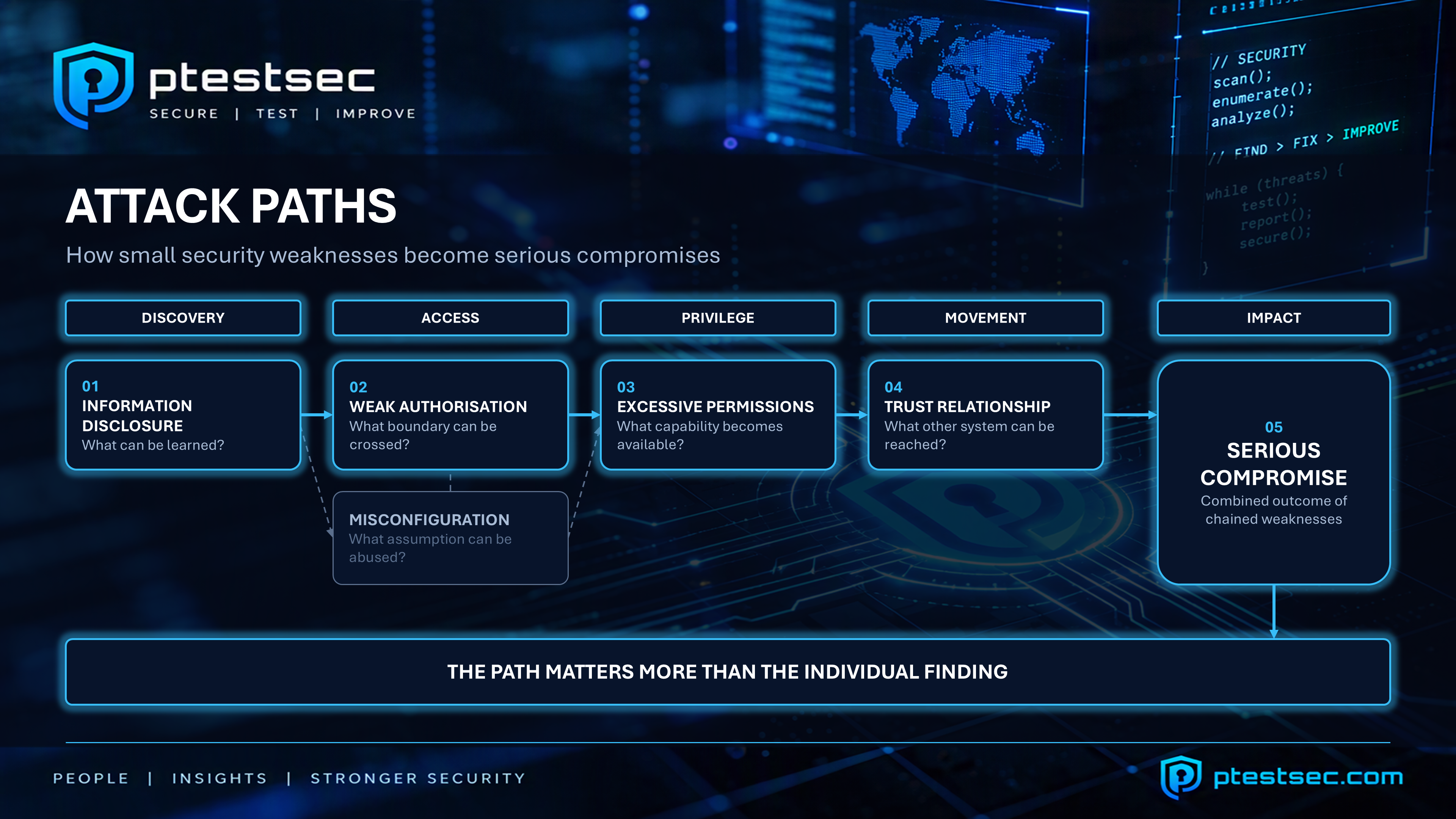
Small security weaknesses can combine into serious attack paths. Learn how identity, trust, access and privilege can turn modest findings into larger compromises.
Read moreBlog
Practical security writing from Ptest Security, covering penetration testing, application security, vulnerability management and defensive guidance.
Browse the latest material published by Ptest Security.

Small security weaknesses can combine into serious attack paths. Learn how identity, trust, access and privilege can turn modest findings into larger compromises.
Read more
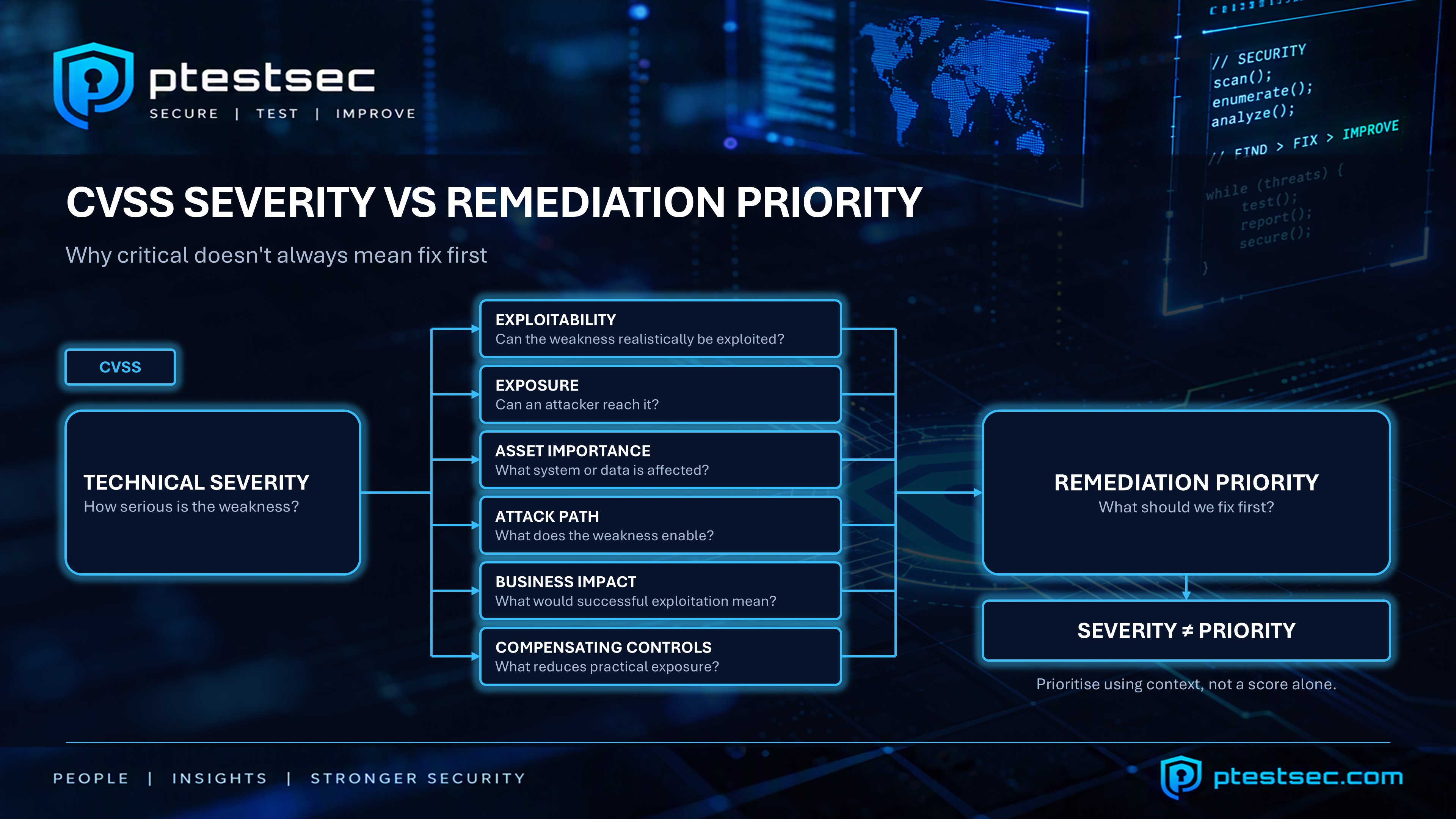
CVSS communicates vulnerability severity, but remediation priority also depends on exploitation, exposure, asset context and the security path a weakness enables.
Read more
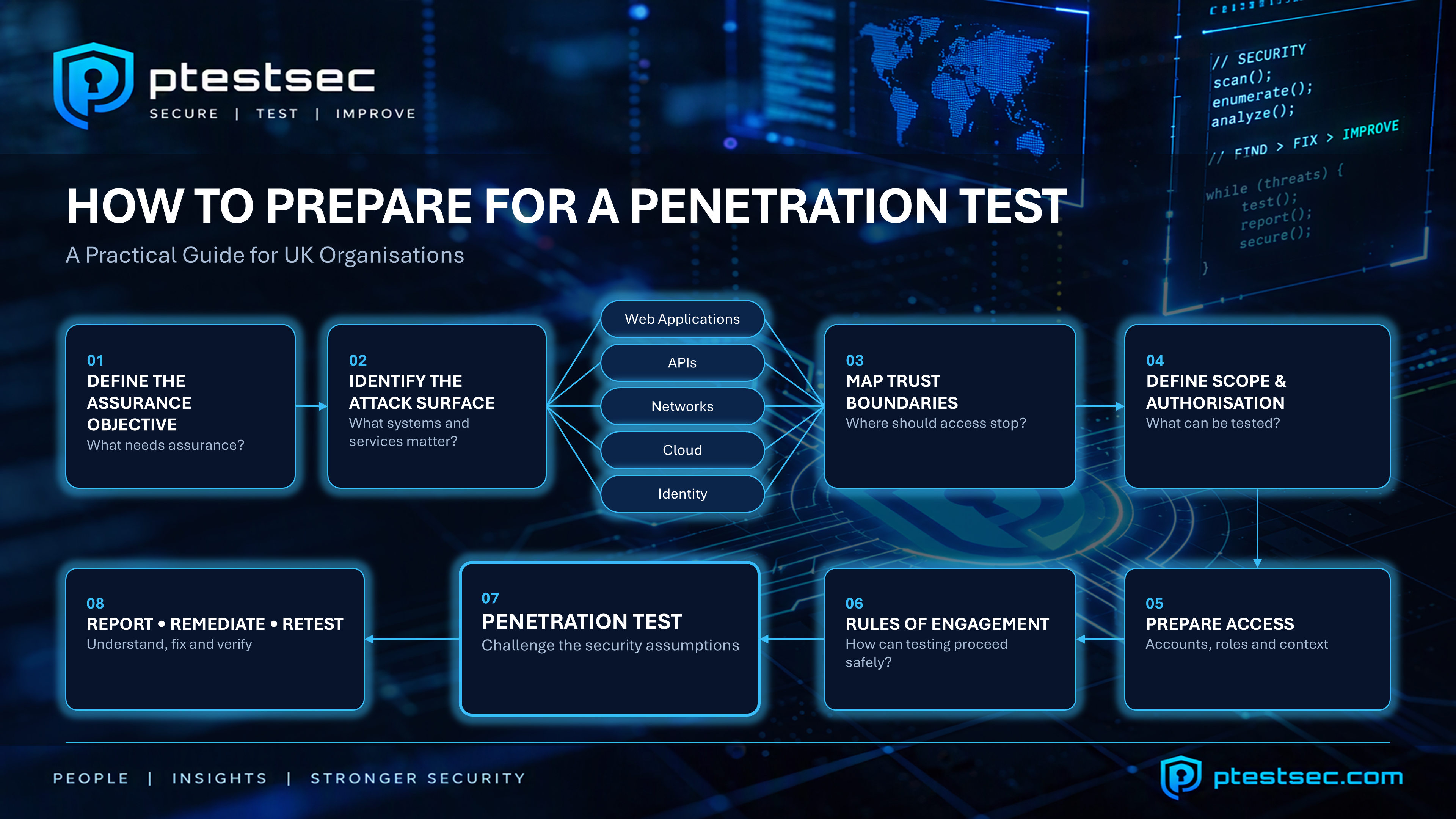
A practical guide to scoping and preparing for a penetration test, from assurance goals and attack surface to access, safety, reporting and retesting.
Read moreBrowse earlier publications, newest first.

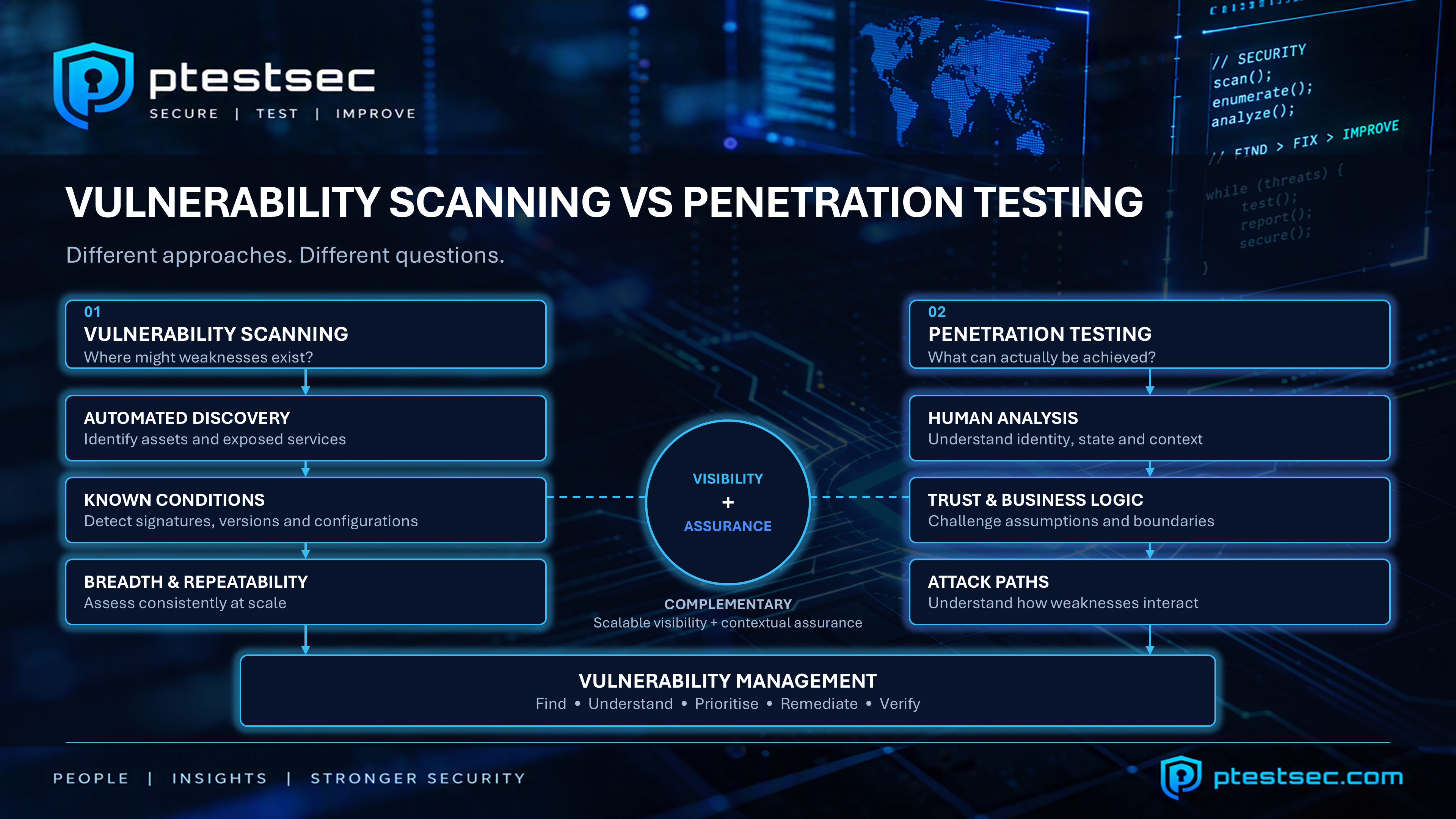
Vulnerability scanning gives organisations repeatable breadth across known weaknesses; penetration testing provides deeper assurance by examining whether controls can be bypassed and what weaknesses mean in context. The two approaches solve different problems and are strongest when used together.

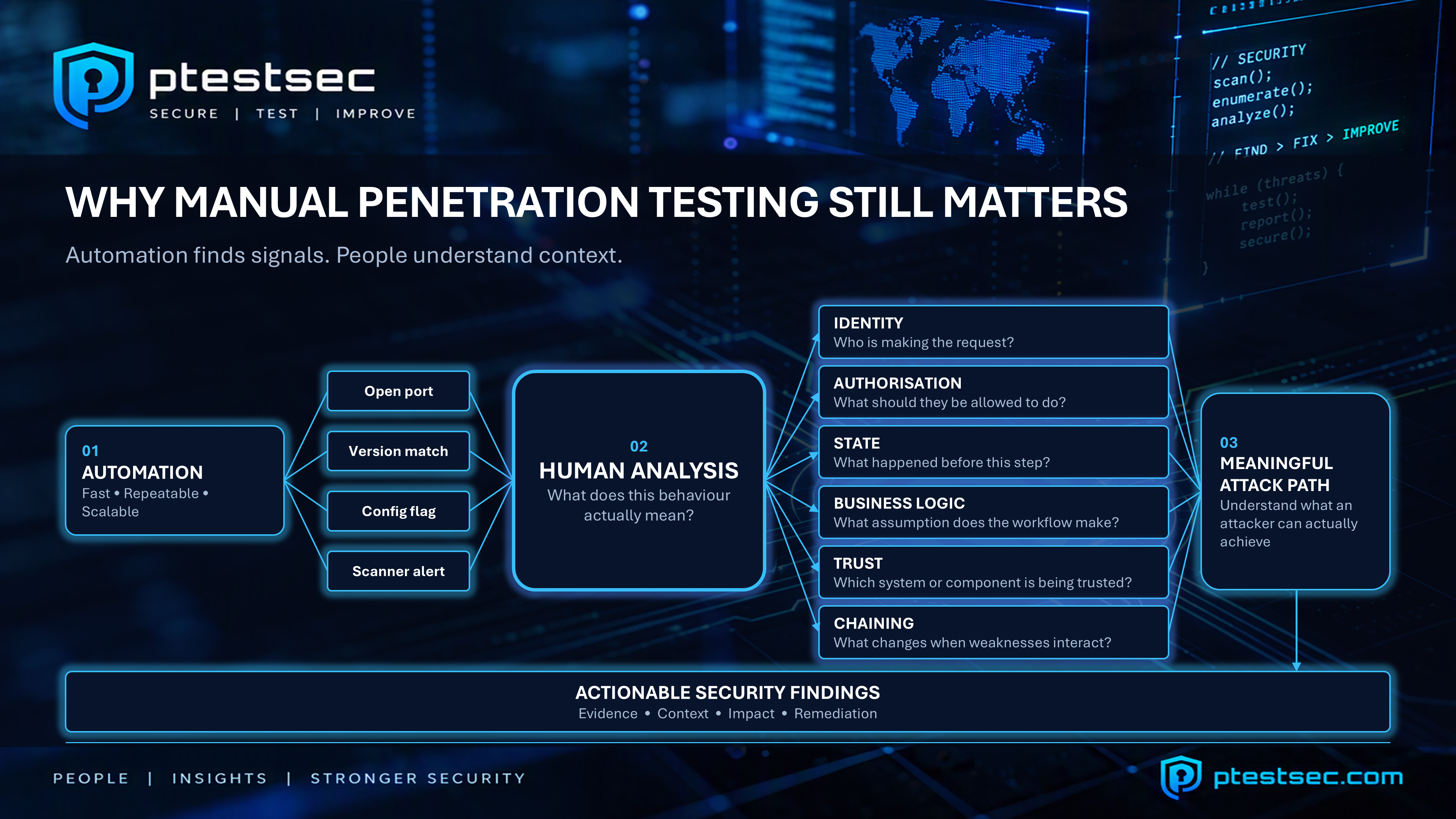
Security automation excels at repeatable detection across large attack surfaces. Manual penetration testing adds the reasoning needed to examine trust, identity, workflow and context, especially where the interesting weakness is not a single signature but the way legitimate system behaviours combine.
Ptest Security provides hands-on penetration testing across web applications, APIs, networks, cloud, mobile, wireless and authorised social engineering.
Tell us what you need tested and we’ll help define the right scope and approach.